

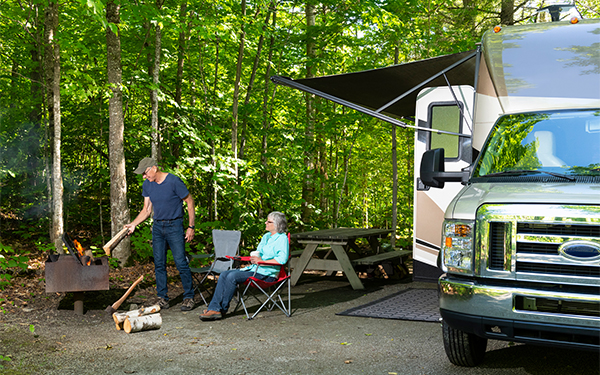
RV insurance policies can vary drastically from one to the next. While many factors affect your policy details (and ultimately your rate), one of the biggest differences comes down to how often your RV is in use. If you RV full-time or are considering making the switch, it’s important to understand how this will change the amount of insurance you need.
Let’s cover the basics of what it means to be a “full-time RVer” and what kinds of coverage can help keep you and your belongings protected wherever you travel.
How Insurers Define Full-Time vs. Recreational Use
If you spend most of the year in your RV—six months or more annually—or treat your rig as your primary residence, you’re generally considered a full-time RVer. This can include people who:
– Sold their house or ended a long-term lease to move into their RV.
– Use a long-term campground or RV park as their primary residence.
– Use their RV to travel for most of the year.
If you own a home and only use your RV for vacations, weekend trips, or short seasonal runs, you typically fall into the part-time or recreational category.
Why does this matter for RV insurance? This distinction in use helps determine what coverages your policy should include—whether it focuses mainly on road risks or combines those with “at-home” risks like what you’d see in a homeowners or renters policy.
When Your RV Is More Than a Getaway
Every RV policy includes some form of liability coverage, but it can work differently for recreational and full-time RVers.
For recreational RVers, liability coverage works similarly to a standard auto liability policy. It helps protect you if you cause an accident and injure someone or damage their property while driving your RV. Many policies also offer vacation liability, which can extend some protection while you’re temporarily at a campsite.
Full-time RVers, on the other hand, typically need broader liability protection when their RV also serves as their primary residence. That’s why many full-time RV insurance policies include extended personal liability coverage that acts more like what you’d see on a homeowners or renters policy. This can help if:
– A neighbor trips on your RV steps and breaks a bone.
– A guest slips on a rug inside your RV and needs surgery.
– An accident around your RV “front lawn” leads to a lawsuit over medical bills or property damage.
Protecting Your Personal Property as a Full-Time RVer
As a full-time RVer, your RV often holds most of what you own—furniture, cookware, work laptops, camping gear, and daily essentials. Because your RV also acts as your primary home, you’ll need personal effects coverage with limits that feel closer to what you’d carry on a renters or homeowners policy. That way, if a covered peril such as theft, vandalism, or fire damages your RV and everything inside, you have enough coverage to rebuild your life, not just replace a weekend’s worth of gear.
If you have high-value items such as jewelry, cameras, or collectibles, you may also have the option to “schedule” these on your full-time RV insurance policy, so they have greater protection.
Not sure how much limits you need on your current policy? Here’s a quick question to ask yourself: if your RV and everything else inside disappeared tomorrow, would your current limits come close to replacing your belongings? If the answer is no, you may need to review your policy details and increase coverage.
Medical Payments and Living Expenses
The more time you spend in or around your RV, the more chances there are for everyday injuries that aren’t tied to a crash. This is where medical payments coverage and emergency or loss-of-use coverage can become especially helpful.
MedPay, or medical payments coverage, can apply to injuries that happen in or near your parked RV, not just on the road. For example, if a guest bumps their head on your RV or trips on one of your rugs, MedPay can help cover initial medical expenses.
Emergency expense or loss-of-use coverage is another add-on to consider if your lifestyle leans more full-time. If a covered peril makes your RV unlivable, this coverage can help pay for temporary living costs and meals while your rig is being repaired or replaced.
If you only RV a few times a year, the extra cost for these coverages may not feel worthwhile. But if you’re sleeping in your rig for long stretches, they can help you avoid a major financial shock.
Matching Coverage to Your RV Lifestyle
There is no single “right” RV policy that fits every owner. Being honest about how you really use your RV is key to building a policy that will cover the various situations you find yourself on while traveling. Although liability and comprehensive and collision coverage are the standard building blocks for most, if you find yourself starting to:
– Spend longer stretches in your RV in one place
– Host more friends and family at your RV site
– Carry more personal belongings with you on the road
…then it may be time to consider additional RV insurance coverages, even if you aren’t a full-time RVer.
An RV insurance specialist can walk you through your current policy, explain where your protection stops, and suggest any upgrades that make sense for how you live and travel. At Quick RV Insurance Quotes, we’ve worked with countless of RV owners and understand that no two setups—or lifestyles—are exactly alike. If you’re wondering if your policy could use a helpful review, speak with an RV Insurance Specialist at (866) 501-7335 to discover what options are available to you.
The information in this article is obtained from various sources and offered for educational purposes only. Furthermore, it should not replace the advice of a qualified professional. The definitions, terms, and coverage in a given policy may differ from those suggested here. No warranty or appropriateness for a specific purpose is expressed or implied.